Imagine you ask a friend for a restaurant recommendation. You wouldn’t trust a random stranger who is never eaten there. You had trust someone who actually went, tried the food, and knows what they’re talking about. That’s basically what’s happening in search engines right now except the “friend” is an AI, and it’s picking which websites to trust before it answers your question.
This is the world of AI Overviews and GEO (Generative Engine Optimization), and at the center of it sits an old but suddenly very important concept: E-E-A-T.
Quick Refresher: What Is E-E-A-T?
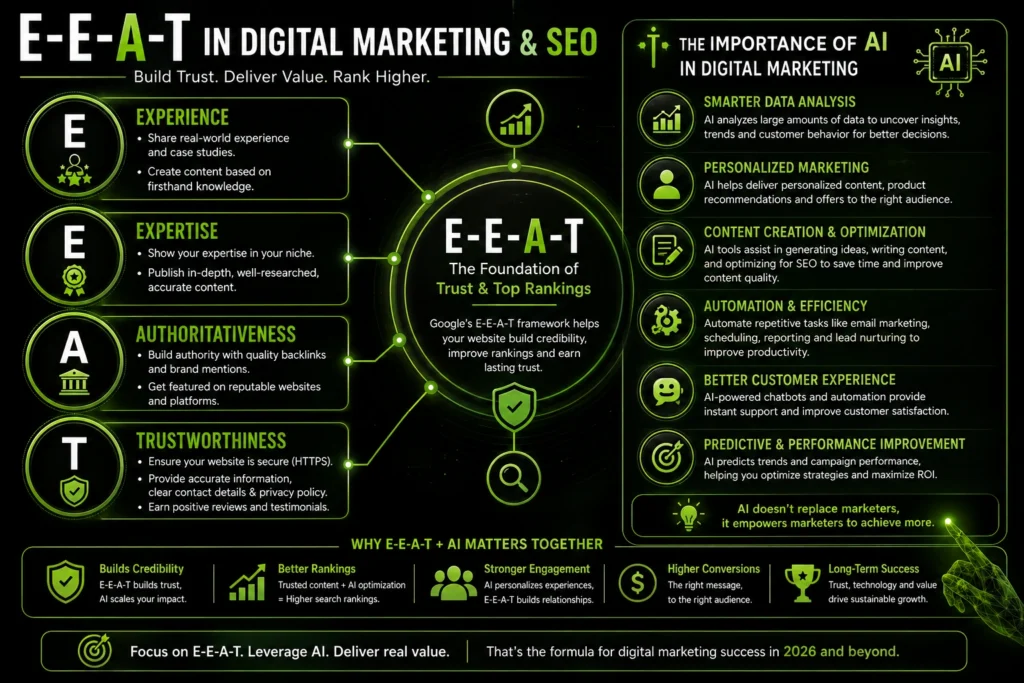
E-E-A-T stands for Experience, Expertise, Authoritativeness, and Trustworthiness. It’s the framework Google uses to judge whether content deserves to be trusted and shown to people. Think of it as a credibility test:
- Experience -Has this person actually done the thing they’re writing about?
- Expertise – Do they genuinely know the subject?
- Authoritativeness – Are other trusted sources treating them as an authority?
- Trustworthiness – Is the content accurate, honest, and safe to rely on?
For years, E-E-A-T mattered mainly for search rankings. Today, it matters for something bigger whether an AI even mentions you at all.
Search Has Changed. Trust Hasn’t.
Search used to work like a library. You typed a question, got a list of book titles (links), and picked one to read. Simple.
Now, AI Overviews and tools like ChatGPT, Gemini, and Perplexity skip the library altogether. They read the books themselves and hand you a summary. You get an answer instantly no clicking required.
Consumer surveys suggest a similar share of people are already relying on AI-powered search instead of typing into a traditional search bar. When an AI Overview appears, ordinary website clicks tend to fall sharply some tracking has found organic click-through rates dropping by more than half on those searches.
Here’s the part that should make every business pay attention: when an AI decides which sources to trust enough to summarize, it’s making an E-E-A-T judgment in real time. If your content doesn’t look experienced, expert, authoritative, and trustworthy, the AI simply won’t reach for it.
GEO: The New Game, Same Old Rules
GEO Generative Engine Optimization is the practice of shaping your content so AI systems are more likely to cite it, quote it, or recommend it. It sounds futuristic, but the foundation underneath it is refreshingly familiar. In other words: GEO isn’t a replacement for E-E-A-T. It’s E-E-A-T with higher stakes.
Google itself has weighed in here too its own guidance frames optimizing for generative AI search as simply an extension of standard SEO, not some separate discipline requiring different rules.
Why AI Is Even Pickier Than a Human Reader
A person skimming a search results page might click on three or four links before finding a good answer. An AI doesn’t have that luxury it has to pick its sources instantly and stand behind them in the answer it gives you. That pressure makes AI systems arguably stricter judges of credibility than traditional search rankings ever were.
Research studies looking into what actually gets content cited by AI engines found some genuinely useful patterns, content backed by real statistics saw a meaningful visibility boost, and so did content that included direct quotations and clear source citations. In plain English content that reads like it was written by someone with first-hand knowledge and receipts, not vague guesses, gets picked more often.
What This Means for Real Businesses
If you run a local business, a service company, or any brand competing for attention online, here’s the practical takeaway: it’s no longer enough to simply exist online. You need to visibly demonstrate why someone should trust you.
That means:
Show real experience, not just claims. Original photos, case studies, and specific project details do more for you than generic descriptions ever could.
Let real experts speak. Author names, credentials, and genuine bios help both readers and AI systems understand who’s actually behind the content.
Build authority through consistency. Getting mentioned, linked, or referenced by other credible sources over time builds the kind of reputation that both search engines and AI systems recognize.
Keep everything accurate and current. Outdated information doesn’t just look bad AI systems are known to favor recently updated content over older, unrefreshed pages.
Make your trust signals easy to find. Reviews, testimonials, clear contact details, and transparent business information all reinforce trustworthiness.
Why Local Expertise Still Wins
Here’s something reassuring in all this AI disruption: genuine, local, hands-on expertise is exactly the kind of thing AI systems are designed to reward. A business that has actually worked with real clients, in a real place, solving real problems has a natural E-E-A-T advantage over generic, one-size-fits-all content.
That’s precisely the strength a business gets from partnering with someone who understands both the technical side of search and the local market they’re serving which is exactly why working with the best digital marketing strategist in Kannur can matter more now than ever. Local experience isn’t just a nice story to tell; in an AI-driven search world, it’s becoming a genuine ranking and citation advantage.
Conclusion
Search is no longer just about being found it’s about being trusted enough to be repeated. AI Overviews and GEO haven’t replaced the old rules of credibility; they’ve simply raised the stakes on them. Experience, expertise, authority, and trust were always good practice. Now, they’re the entry ticket to being part of the answer at all.
If your content, your website, and your brand can’t clearly prove those four things, an AI won’t take the risk of vouching for you and neither will the customers reading its answer.